Know When to Vanish: The Smart Aussie's Guide to Walking Away After a Loss
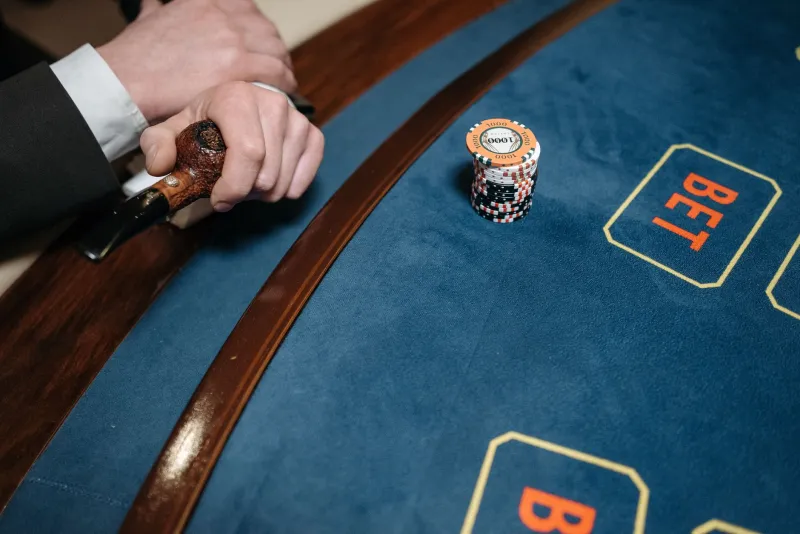
There's a particular kind of silence that falls over a player who's just watched their session balance hit zero. The reels slow, the cards fall wrong, and for a split second, the jungle goes completely still. What happens in the next thirty seconds can define the entire night — and sometimes, the entire month.
Most Aussie players have been there. The instinct to reload, to chase, to convince yourself the tide is about to turn is almost biological. But here's the thing the smartest players have figured out: walking away at the right moment isn't a sign of weakness. It's the move that separates recreational players who stay in control from those who spiral.
This is about building that exit strategy before you ever sit down to play.
Why the Brain Fights the Walk-Away
Understanding why leaving feels so hard is the first step to actually doing it. When you're on a losing streak, your brain doesn't go quiet — it gets louder. Dopamine, the chemical that fires when you anticipate a reward, doesn't switch off just because you're losing. If anything, near-misses and mounting losses can actually increase anticipatory arousal, which is why the urge to keep going intensifies at exactly the wrong moment.
Psychologists call this the "sunk cost fallacy" — the deeply human tendency to keep investing in something because of what you've already put in, not because of what's realistically ahead. You're not chasing a win. You're trying to emotionally erase a loss. Those are very different things, and the casino environment — with its constant stimulation, no clocks, and endless continuation — is designed to make you forget the distinction.
For Australian players specifically, there's often a cultural layer on top of this. The "she'll be right" attitude, the larrikin impulse to push through, the social pressure not to be the one who bails early — these are real forces that can quietly override your better judgement.
The Loss Limit: Your Jungle Exit Route
Every experienced player worth their salt has a predetermined loss limit. Not a vague mental note, but a firm, decided-in-advance number that represents the maximum they're willing to part with in a single session. Once that number is hit, the session ends. Full stop.
Setting this number before you play is critical. Here's why: once you're mid-session and emotionally invested, your judgement is already compromised. Decisions made in the heat of a losing run are almost never your best ones. The loss limit you set at the kitchen table, with a clear head and a cup of tea in hand, is a far more reliable guide than whatever feels right after your third bad run in a row.
A practical starting point for most recreational Aussie players is to set a loss limit at no more than 20–30% of your total session bankroll. So if you've budgeted $200 for a night's play, a loss limit of $40–$60 is a reasonable ceiling. Once you hit it, you treat it like a hard wall, not a suggestion.
Real Scenarios Where the Exit Saves You
Let's run through a couple of situations that might feel familiar.
Scenario one: You're 45 minutes into a pokies session and you've burned through $80 of your $120 budget. The game hasn't paid anything meaningful. Your brain starts whispering that it's "due." You've got $40 left and you're tempted to push through. Here, a pre-set loss limit of $80 makes the decision for you. You don't have to wrestle with it — the rule already answered the question.
Scenario two: You've had a decent run at the blackjack tables, turned $100 into $180, and then hit a rough patch. You're back down to $110. You're up overall, but the losing streak feels like it's building momentum. This is where many players make a costly error — they chase back to their peak rather than locking in a profit. A pre-set "walk away" trigger of, say, 20% below your session high would have you packing up at $144. Instead, the urge to recover the last $70 keeps players glued to the table until they've given it all back.
Both scenarios have the same fix: decide your exit conditions before the session starts, not during it.
Building the Habit: Practical Techniques That Actually Work
Knowing you should walk away and actually doing it are two different skills. Here are some techniques that help bridge that gap.
Write it down. Before you open your casino app or head to a session, write your loss limit on your phone's notes app. The act of committing it to text creates a small but meaningful psychological contract with yourself.
Use deposit limits and session tools. Most reputable Australian online casinos offer responsible gambling tools — deposit caps, session time reminders, and cooling-off periods. Use them. They're not just for people in crisis; they're smart infrastructure for any player who takes their bankroll seriously.
Create a physical ritual for the exit. When you've hit your limit, close the app, put your phone face-down, and do something completely unrelated for ten minutes before you consider anything else. A glass of water, a short walk, a different screen entirely. The interruption breaks the emotional loop.
Debrief without self-punishment. After a session where you walked away at your limit, take a moment to acknowledge that you did the right thing — even if it stings. Reframing the exit as a disciplined win, rather than a defeat, gradually rewires how your brain categorises the behaviour.
The Long Game Is the Only Game Worth Playing
In the jungle, the predators that survive aren't the ones who go hardest every single hunt. They're the ones who conserve energy, read the terrain, and know when retreating is the smartest tactical choice available. A lion that burns itself out chasing prey it can't catch doesn't eat tomorrow.
The same logic applies here. Australian players who build sustainable, enjoyable gambling habits aren't the ones who go hardest every session — they're the ones who protect their bankroll, honour their limits, and live to play another day.
Walking away after a loss isn't giving up. It's the move that keeps you in the game on your own terms, not the casino's. And in the long run, that's the only kind of player who really wins.