Fangs in the Dark: What's Really Happening to Your Brain During 3 AM Casino Sessions
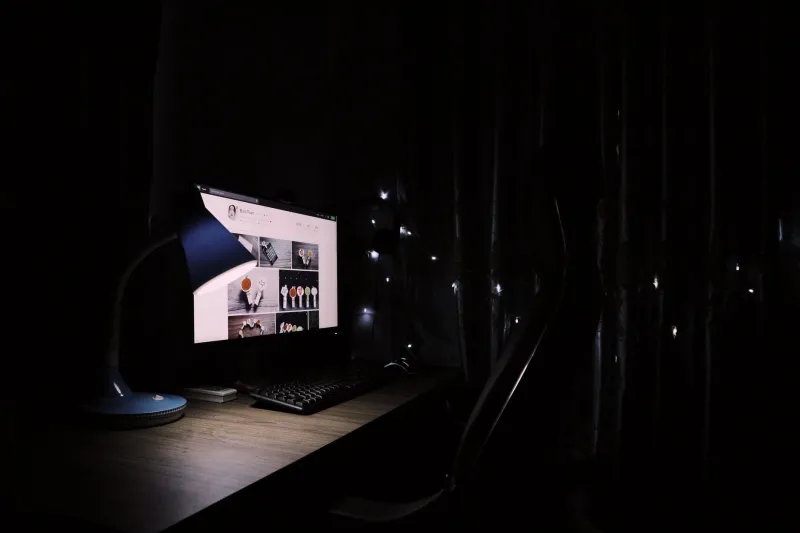
There's something seductive about the deep hours of the night. The house is quiet. Your phone isn't buzzing. Nobody's asking you for anything. The glow of the screen is the only light in the room, and for a moment, it feels like the whole digital jungle belongs to you.
It's also, from a financial decision-making standpoint, one of the worst possible times to be gambling online.
This isn't a moral position. It's neuroscience. And once you understand what's actually happening inside your skull between midnight and dawn, the appeal of the late-night session starts to look a lot less like freedom and a lot more like vulnerability.
Your Brain After Midnight: A Field Guide
The human brain doesn't operate at a flat, consistent level throughout the day. It runs on a circadian rhythm — a roughly 24-hour biological cycle that regulates everything from body temperature to hormone production to, critically, cognitive function.
By the time most Australians are settling in for a late-night session — let's say 11 PM onwards — several important neurological shifts have already occurred or are underway:
The prefrontal cortex starts stepping back. This is the part of your brain responsible for impulse control, risk assessment, and long-term planning. It's the bit that says "you've hit your limit, log off." Sleep pressure — the biological drive to sleep that builds throughout the day — impairs prefrontal function progressively as the night goes on. By 2 or 3 AM, it's working at a significantly reduced capacity even if you feel wide awake.
Dopamine sensitivity increases. Here's the cruel twist: sleep-deprived brains show heightened sensitivity to reward signals. You feel the wins more intensely. The near-misses hit harder. The excitement of a bonus round is genuinely more stimulating at 3 AM than it would be at 3 PM — not because the game changed, but because your neurochemistry did.
Emotional regulation deteriorates. The amygdala — your brain's emotional alarm system — becomes more reactive as fatigue increases. Losses feel more devastating. Wins feel more euphoric. The emotional distance that helps you make calm, rational decisions erodes steadily through the night.
Working memory shrinks. Keeping track of how much you've spent, how long you've been playing, and how this session compares to your stated limits all require working memory. Late-night fatigue compresses that capacity, making it genuinely harder to maintain an accurate picture of your financial situation mid-session.
The Illusion of Alertness
One of the most insidious aspects of late-night play is that you often don't feel impaired. Casino games are stimulating. The lights, sounds, and intermittent rewards trigger alert states that can mask fatigue for extended periods. You're engaged, you're reacting, you feel sharp.
But subjective alertness and actual cognitive performance are two very different things. Research on sleep deprivation consistently shows that people significantly overestimate their own functioning when tired. Participants in studies who were performing measurably worse on decision-making tasks routinely rated themselves as performing well.
For Aussie players at 2 AM who feel like they're in the zone, this is a critical distinction. The feeling of being switched on is real. The actual decision-making quality behind that feeling is not what it seems.
What You Actually Do Differently at Night
Beyond the neurological changes, late-night sessions tend to produce specific behavioural patterns that compound the risk:
Session lengths blow out. Without the natural interruptions of daytime life — work, meals, social obligations — sessions run longer. What starts as an hour easily becomes three. The absence of external anchors removes a key natural stopping mechanism.
Deposit discipline weakens. The friction that normally exists around depositing more money — the pause, the consideration, the mild social self-consciousness — is at its lowest in the middle of the night. Nobody's watching. The mental accountant who keeps tabs on your spending is half asleep. Deposits happen faster and with less deliberation.
Loss chasing intensifies. With emotional regulation diminished and reward sensitivity heightened, the urge to recover losses is stronger at night. The calculus that would lead a rested player to accept a loss and walk away becomes distorted. A $50 loss at 3 AM feels more urgent, more personal, more fixable than the same loss at 6 PM.
Riskier game choices emerge. Players who normally stick to lower-volatility games with modest bet sizes often drift toward high-variance slots or bigger bets during late sessions. The heightened dopamine sensitivity makes the prospect of a big win more compelling, and the reduced prefrontal oversight means there's less resistance to acting on that impulse.
The Platform's Perspective
It's worth being clear: reputable online casinos don't target tired players with algorithms designed to exploit fatigue. The games run the same way at 3 AM as they do at 3 PM — the RNG doesn't know what time it is, and the house edge doesn't change.
But the platform is available. It's open. It's designed to be engaging. And the responsibility for managing the timing of your play sits entirely with you, because the platform will never tell you to go to bed.
Responsible gambling tools — session time reminders, deposit limits, cooling-off periods — exist precisely because the industry recognises that player self-regulation has limits, especially in high-vulnerability states. Using them isn't weakness. It's applying the same logic a smart hunter uses: know when the conditions favour you, and know when they don't.
Protecting Yourself in the Dark Hours
If late-night play is part of your routine, the goal isn't necessarily to eliminate it — it's to build structures that compensate for your brain's reduced capacity during those hours.
Set tighter limits for night sessions specifically. Your daytime loss limit and your 1 AM loss limit should probably not be the same number. Acknowledge the elevated risk with a more conservative ceiling.
Use a timer with teeth. A soft reminder that you've been playing for an hour is easy to dismiss when you're tired. A hard session limit — set in advance through the platform's tools — removes the decision from your impaired late-night self entirely.
Don't deposit after midnight. Make this a firm rule. If you've run through what you brought to the session, the answer is sleep, not a top-up. The games will be there tomorrow. Your bank balance will thank you.
Watch for the "just one more" spiral. This phrase is the nocturnal hunter's calling card. It appears at the exact moment your prefrontal cortex has lost the argument with your dopamine system. When you hear yourself thinking it, the session is already over — you just haven't accepted it yet.
Have a genuine shutdown ritual. Close the browser, put the phone face-down, drink a glass of water. Physical actions that signal the end of a session help override the psychological pull to continue. Make the transition deliberate.
The Night Belongs to the Jungle, Not the Hunter
The digital casino jungle doesn't sleep. It's lit, accessible, and thrumming with activity at every hour of the day or night. That accessibility is part of what makes online gaming genuinely convenient and enjoyable.
But the jungle at 3 AM operates by different rules than the jungle at 3 PM — and the difference isn't in the games. It's in you. Your instincts are slower. Your risk perception is blunted. Your emotional responses are louder and less filtered.
The smartest players in any environment know how to read the conditions, not just the game. And right now, at whatever hour you're reading this, the most useful thing you can do is make a decision about late-night play in the cold light of day — before the dark hours make that decision for you.